Showing posts sorted by relevance for query Bananas. Sort by date Show all posts

Tuesday, August 27, 2019

Bananas

Did you know a banana is a berry?
This has been a good year for bananas.  Last winter was a warm one and our bananas did not die back as they do in a "normal" year.

Bananas usually take two years to produce fruit in our area and they are not freeze-tolerant, so a mild winter is necessary for fruiting.  They will usually survive down to 28 degrees.  Frozen plants should be cut back to good growth in the spring.  Even if they freeze to the ground, they will usually return from the underground rhizomes.

Once a stalk bears, it should be cut to the ground as it will not bear again.  It is recommended that clumps consist of three plants, a large bearing-size stalk, a medium stalk, and a small shoot.  

When the banana stalk develops, the bloom at the bottom will descend, and the exposed stalk and bloom  may be cut off to encourage better development of the fruit.   Unfortunately the tree pictured is too tall to reach the stalk.  Perhaps the tree will have to be cut down to harvest the bananas.
 
If the frost threatens before the bananas are ripe, cut the stalk and ripen the bananas inside.  They will ripen inside at any time after the bananas are fully developed.  Bananas like a lot of water and a lot of nutrients.  For all you need to know about growing bananas, the difference between plantains and bananas and much more information see:  https://edis.ifas.ufl.edu/mg040

Even if your bananas are not as sweet as those at the grocery store, they make great banana bread.  The recipe below was developed one year when the banana trees in back of the office where I worked bore 18 stalks of bananas giving a friend and I ample opportunity to test many banana bread recipes.  This was our favorite.

Banana Bread 

 1/2  cup (1 stick) butter           
1  cup sugar
2 eggs
1  Tbsp. vanilla
1  cup mashed bananas (about 3 bananas)
1/2 cup low fat buttermilk (or substitute 1/4 cup milk and 1/4 cup sour cream)
2  cups sifted flour 
1  tsp. baking soda
1  tsp. salt
1  cup nuts, chopped

Cream butter and sugar together.  Beat in eggs, then bananas, milk, and vanilla.  Sift together dry ingredients except nuts.  Add to banana mixture, stirring lightly to mix.  Fold in nuts.  Pour into greased and floured 9 x 5 x 3 inch loaf pan.   The pan should be about three-fourths full.  (Makes one large loaf, two smaller loaves or four mini loaves.) Bake at 350 degrees about 60 minutes, less for smaller loaves, until pick inserted in center comes out clean.

The flour can be white or whole wheat or a combination.  Oat bran or oatmeal pulverized in food processor is also good as part of the flour.  The sugar can be all white or half white and half brown.  (For brown, pack when measuring).  The riper the bananas, the better.  In fact, when bananas get too ripe to eat, store them in the freezer, peel and all.  When ready to use, thaw until just soft, peel and pour into cup to measure.  They look really yucky, but the banana bread they make is moist, sweet and strong in banana flavor.

Thursday, March 31, 2022

Everyone’s Going Bananas

Bananas after a moderately
cold winter
Banana plants look so lovely and tropical throughout the summer months but after a cold winter they are pretty ugly and bedraggled. What to do — cut down the whole thing, cut off the dead leaves? Are there going to be any bananas this year?  These and many other questions were answered at the VegHeadz Garden this Wednesday as we pruned our bananas in preparation for the spring growth spurt.  Here are some quick guidelines:

Bananas are a grass and their upright portion is called a pseudostem. Because it functions as a trunk, that’s what we’ll call it.  Bananas plants grow from rhizomes with many growing points. The entire stand of bananas is called a mat. 

Unless it was an exceptionally cold winter and your bananas are mushy all the way to the ground and stinky, cut off only those parts which look dead and leave anything that is still green or firm as a base for new growth. Leave pruning debris on the ground around the mat as mulch and nutrition for the remaining plants.  Chop up heavier parts to allow them to decompose more quickly.  Banana prunings also make excellent additions to your compost bin. Preferred tools for cutting bananas are machete, handsaw, or reciprocating saw. Don’t use your chainsaw as the moist, stringy material in the trunks will make a big mess in your saw chain.  
Cold damaged
unharvested
immature bananas


If your banana plant has produced bananas of any type, whether mature or not, cut the trunk all the way to the base. It will not make bananas again, and you do not want the mat to waste energy sustaining a plant that will not bear fruit.  To keep these non-productive plants from regrowing, use a piece of rebar or another sharp object to kill the bud in the center of the stump.   

The ideal population of a mat is three banana plants — one fully grown bearing-size, one second year plant which is about half grown, and one new shoot. With a large mat, this can be extended to about twice that number with adequate water and nutrition, but leaving more will reduce fruit production. It takes anywhere from six to 20 months for a banana plant to bear a mature stalk of bananas, depending on the weather, water, nutrition, and density of the mat.

Thinning out the mat
With regard to new shoots, you want to save shoots with narrow leaves, called sword suckers. The ones with wider leaves are called water suckers.  Water suckers will not have a good attachment to the rhizome and will not bear as well, so cut all these down. Shoots that are so small you can’t determine what type of leaves they have are called peepers.

For the difference between bananas and plantains, banana varieties, plant care, when to harvest, how to ripen, and much additional information about growing bananas in your food forest or home landscape, please see:  https://edis.ifas.ufl.edu/publication/MG040

There was a lot more going on at the garden today also as we plant spring crops, and prepare for the Spring Open House.   

Cutting bamboo to use as supports for 
Giant Sunflowers planted along 
the edge of the garden.  

Checking the micro irrigation 
where new seeds were planted


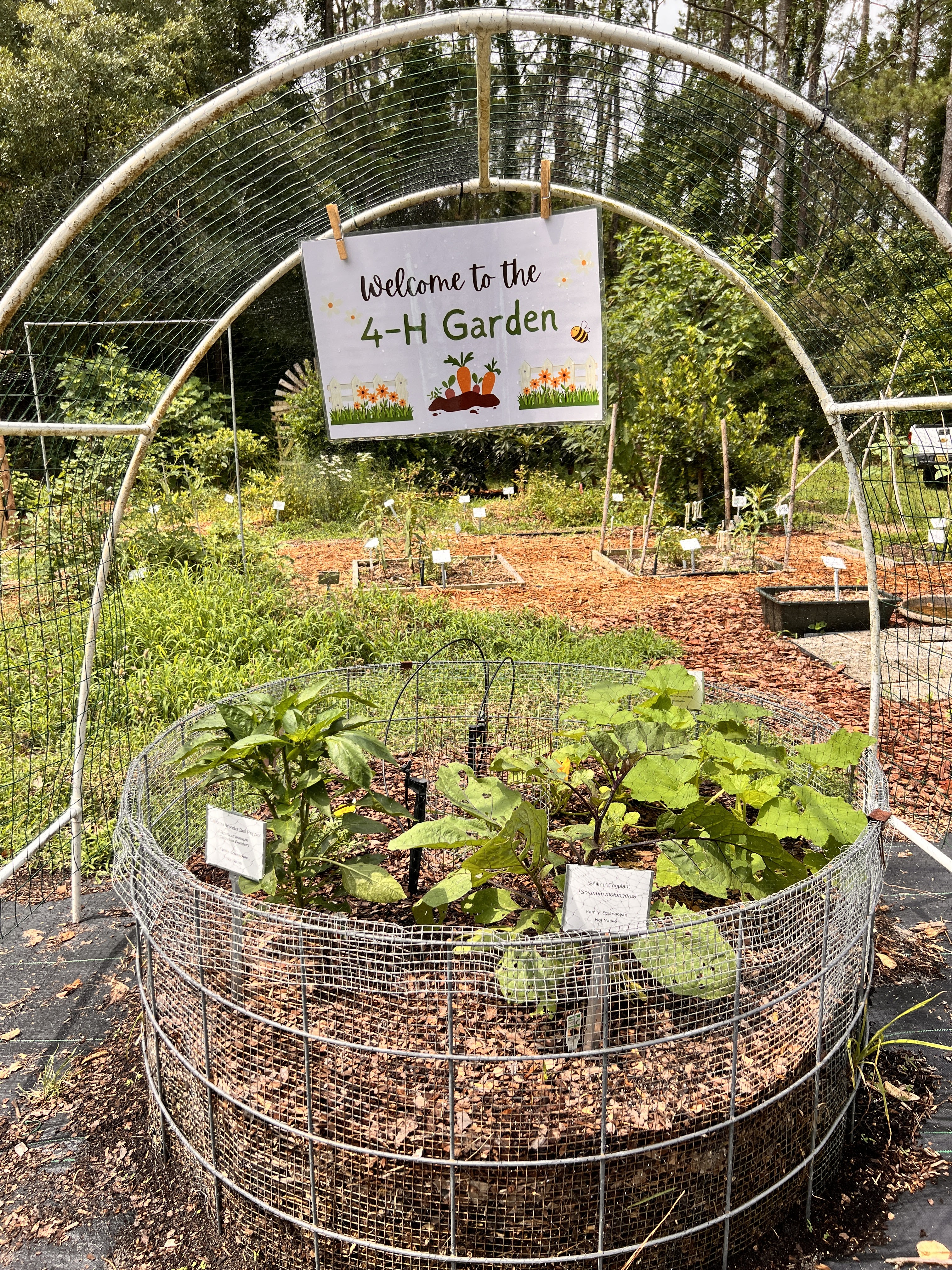
Feeding the 4-H 
Chickens


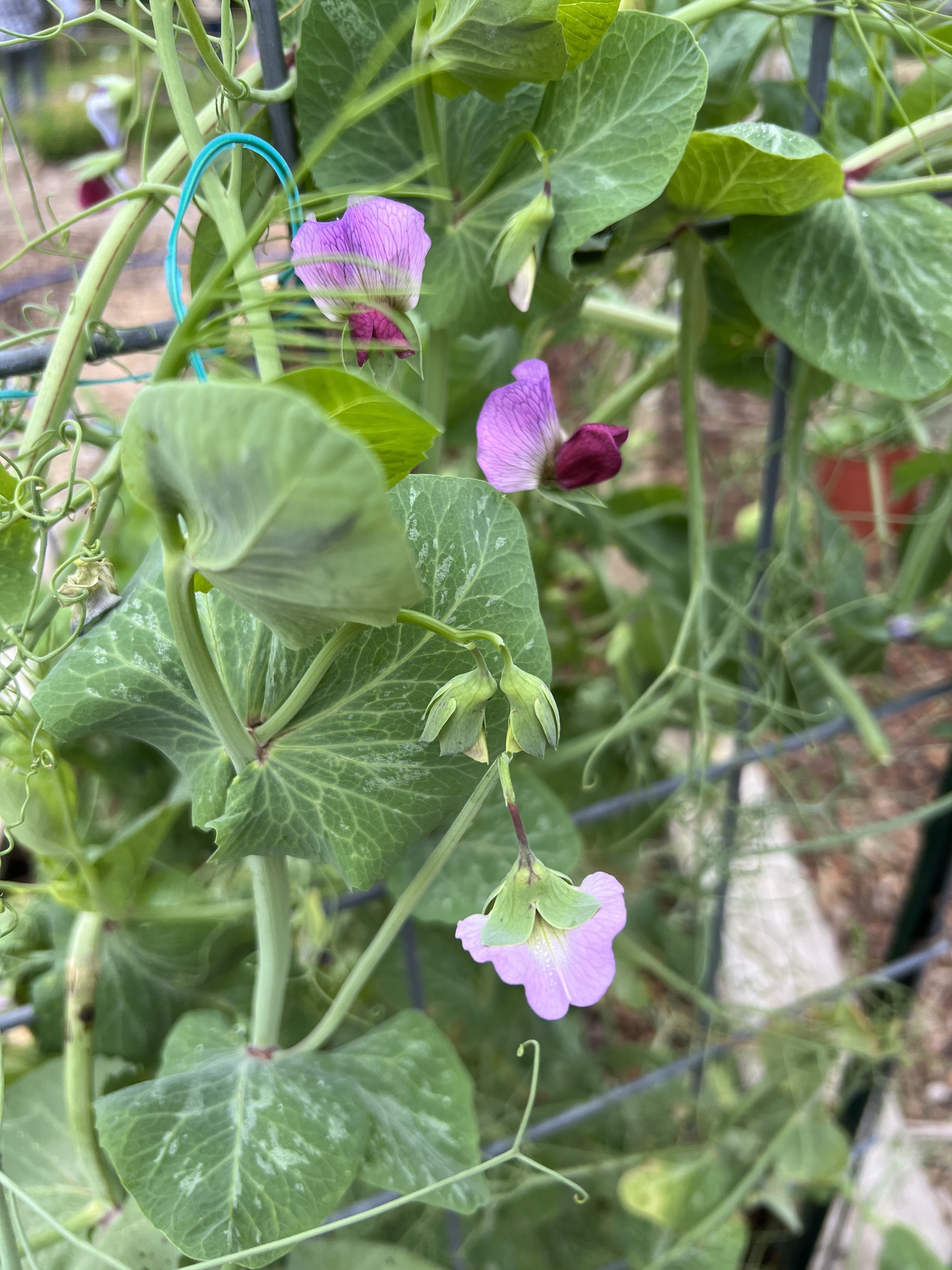
Peas are blooming beautifully

More peas

What a fun day, and what a great 
bunch of VegHeadz volunteers


Come visit the VegHeadz Demonstration Vegetable Garden and Food Forest. We have both standard size bananas (unknown variety) and Dwarf Cavendish.  It’s open at all times during daylight hours and the VegHeadz volunteers are there working on most Wednesday mornings and will be happy to answer questions and show you around.  Also put Saturday, May 7, on your calendar for the annual Spring Open House and Plant Sale at the UF/IFAS Leon County Extension on Paul Russell Road, Tallahassee.  

The mat with pruning finished.  Chopped
prunings are used as mulch to
decompose in place and feed the mat.  


Monday, February 26, 2024

Banana Ripening Update

Our bananas looked like this
in December
The VegHeadz had several good bunches of bananas on their plants last fall, but they did not have time to fill out completely when cold weather hit, stopping their development.  

While bananas ripen better off the tree, in order to reach their full potential they should have plump sides before cutting the stalk down. We assumed that because they were not fully developed, they would not be edible if we tried to ripen them.

Our ever-curious gardeners decided they weren’t going to abide by that assumption, and several of them took bananas home on January 10 to ripen in different situations to see what the results would be.

Cathy ripened hers inside hanging on a coat rack.  It took less than two weeks.   About a dozen ripened and Cathy reported they were firm and sweet.  They were small as they did not develop further after cutting from the plant. The very small bananas turned black as they yellowed, but the larger ones did a bit better (photo). 

Cathy’s ripe bananas

Rebecca ripened hers in a paper bag inside and it took about the same amount of time.  

Peggy hung hers in her unheated garage and they also ripened nicely, but took about six weeks.  She had about a dozen finger-size bananas ripen.  


Peggy’s ripe bananas 

The bottom line—don’t give up on your bananas even if they are not fully developed.  This is the usual result as weather turns cold.  Occasionally bananas will have time to fully develop in our area giving us more bananas than we can use.  It doesn’t happen very often, but we’ve learned we can still enjoy home grown bananas most years.  


Friday, October 3, 2025

Wednesday in the Garden — Bamboo, Bananas and Biochar

Linda L. is loading garden mix 
from a pile near one of the 
two bamboo clumps.
Fall planting season is in full swing and our gardeners are busy getting seeds and seedlings in the ground. 

We wanted to give you an update on our clumping bamboo planted in April 2019, and our biochar trial, which got underway at the garden workday on Wednesday.

This looks like a lot of bamboo, but both clumps of bamboo are well behaved and although tall, do not take up much space on the ground.

Clumping bamboos usually develop new shoots in the fall.   A little over a month ago, Louie D. noticed some coming up around the edges of the clumps. She knocked them over and removed them (this is easy before they harden). This left those coming up in the middle. The spiky new shoots can be seen at the top of the clump.  The shoots emerge from the rhizomes at their mature diameter and grow to their full height very quickly, often in a matter of weeks.

The new culms (the bamboo version of a trunk) have grown larger in circumference each year. We like to use them to define paths in the forest garden, and to build garden structures, such as trellises and tomato supports.

The footprint of the clump
is not very large

The bamboo stays erect, except when it rains.  Then the weight of the water on the leaves causes the culms to arch over, sometimes reaching the ground.  They usually return to an upright position after they dry.  If they don’t, we cut them off so they don’t get in the way. The area under the clumps is shady, quiet, and cool. We’re thinking of putting a bench there so we have another place to hang out in the heat.

Clumping bamboos usually belong to the Bambusa genus.  Those in the VegHeadz garden are Bambusa textilis gracilis and  Bambusa chungii barbelatta

Something else we noticed this week is the bananas. After a cold winter and a week of snow on the ground, the bananas got a slow start this spring.   They just recently sprouted a number of huge clumps of bananas. There’s little chance they will mature before cold weather later this fall, but we’ve learned that even when they’re not fully developed, they can be harvested and ripened.  To learn more about our ripening experiment, insert “banana ripening” in the search box in the right sidebar. 

 
When fully developed, this would 
be a substantial
crop of bananas

Banana blooms are complex and
interesting


There is a new row of florets under each bract layer of the red blossom or “heart.” Each row of florets develops into a “hand“ of bananas. Cutting The blossom off will stop new bananas from forming, and direct the plant’s energy into maturing the ones that have already emerged.  The florettes are edible, and the blossom contains an edible core in the center. These are used in Asian recipes.

Learn about bananas from a young expert.  https://www.facebook.com/reel/863820269644395?fs=e&fs=e

Finally, we are preparing to move our biochar trial into the garden.  Four different versions of a compost/biochar mixture have been “marinating” and have now been added to the trial plots.  

Last week—an overgrown
 watermelon patch—and weeds


Watermelons and weeds gone
Four 4 x 4 beds


Six inches of soil removed from 
beds and mixed together to
provide a uniform growing medium
Photo:  Lisa Jacobson

Four different mixtures of 
compost and biochar were 
added to the beds along 
with the mixed soil from the beds. 
Photo:  Lisa Jacobson


The workers who made it happen

Ready for the next phase.   In a 
couple of weeks we’ll plant the
same crops in each bed.
Photo:  Lisa Jacobson 

Thursday, March 9, 2023

Time to prune bananas

Peggy, Keith and Linda are part
of the banana crew who are returning 
 trunks severed by Mike’s
reciprocating saw to the
banana mat to decompose and
provide nutrients to the emerging new growth.  

Even though we had a hard freeze this year, most of the bananas in our area were not frozen to the ground and still have solid pseudostems, the banana version of a trunk.  Although Extension experts are recommending that pruning fruit trees not be done until later in March or early April, the VegHeadz decided to cut back the bananas in our garden this Wednesday.

They should be cut back until no decomposing tissue is evident on the trunk.  Healthy trunk will be  moist, even wet, but tightly wrapped and dense.  A hand saw, machete or reciprocating saw are good tools to do this rather than a chainsaw. You might want to refer to our post from last year about growing bananas and how to prune them.

Garden coordinator, Cathy Alfano, said it best, “ The garden is looking so pretty these days. Spring is such a verdant and hopeful time, when so much seems possible and all our plants are bursting forth with potential. Thanks to all of you who work so creatively to make it so.”

Other scenes from this Wednesday in the garden:

We love this Tuscan kale plant in Cathy’s
bed.  It just keeps going.  


Louie and Marie are mulching the
pathways around the herb beds.
In addition to controlling weeds,
cardboard and mulch are helping
keep carbon in the garden, not
in the atmosphere.   


Trevor tasted a carrot from 
the 4-H beds.  They are ready to be harvested
at any time. We also harvested some
carrots from our rotation beds.

Peggy is sorting out new plant labels 
for the forest garden.  At this 
time of year, it’s hard to find 
some of the perennials that 
don’t come up until later 
in the spring.  


Peter and Glenn continue with
building the grape arbor.  It
is going to be so solid and 
stable.  

Mary, B.J. and Jeannie are planting corn for the Three Sisters.  
They soaked the corn seeds overnight to encourage germination.  

Janis and Joanne are working on filling up
some bare spots.  Pollinator plants probably 
going here.  Photo by Jeannie Christensen.  

It looks messy, but the bananas will come back strong. Janis, Peggy, Mike, Linda and Joanne.
Photo by Cathy Alfano.  


Thursday, December 14, 2023

Wednesday in the Garden

Some of our intrepid gardeners—
Mike, Louie, Cathi and Cathy
It was a cool day at the VegHeadz garden, but a number of the VegHeadz turned out to weed, and plant, and collaborate, and plan for the VegHeadz table at next week’s annual MG meeting.   No matter the weather, it’s never a good day to miss being in the garden.  

Seen in the garden this week:

Some variety of Pak Choy


Fennel, ready for butterfly larvae
to munch

Beautiful lettuce

Winter vegetables are fun—
many shapes and shades of green

Broccoli almost ready for harvest.  Each 
little bump is a flower bud.  

Peppers—maybe Aji Dulce

Echinacea—Purple Coneflower
Undaunted by recent cold snaps

Looks like Carrots, but it’s
really Dill


The persistent tomato in the Hugelkultur
bed is still producing.  These tomatoes are
down in the center of the plant which 
gives them some frost and cold protection.  


Jalapeno peppers.  In warmer weather 
they would ripen to red if 
left on the plant


Several of our banana trees have produced bananas. Unfortunately they. will not have
time to develop and ripen in winter’s cool weather and short days. Last winter we had a
hard freeze and all the banana trees died back. It takes a banana plant up to 18 months to
bear fruit in our climate.  These “trees” had to first regrow and then produce fruit,
which didn’t give them time to develop completely.  Bunches which are
mostly developed with plump bananas can be cut and ripened inside.  
These undeveloped bunches will be removed and composted along with the plants on which
they grew (will not bear fruit again) and any other surplus banana plants developing within the mat.
For more information, enter “bananas“ in the search box in the right sidebar.


Monday, May 20, 2024

VegHeadz Spring/Summer Garden Tour

The annual open house and plant sale at the Leon County Extension which was scheduled for Saturday, May 11 was canceled because of the severe storms, including three tornadoes, that passed through Tallahassee the day before. The plant sale was rescheduled and many people showed up to buy plants on Wednesday and Thursday of the following week. 

If you are one of the hundreds of people who would have enjoyed tours of the many gardens on the grounds, you will have to wait until next year unless you’d like to visit them and the adjoining orchard on your own any time during daylight hours. 

In the VegHeadz garden at the southern end of the property, we were ready to guide you through our many vegetable and pollinator beds. Thanks to Peggy McDonald for these great pictures giving us a virtual tour.  As always, photos just can’t capture the wonder of a garden.  Again the vegetable gardens and food forest can always be seen and fully appreciated on any day during daylight hours or join us for a personal tour on most Wednesday mornings when we are working there. 

Welcome to the VegHeadz garden as you enter
from the east side through
the rose arbor. 

To your right you will see pollinator
gardens and sunflowers.  

There are sunflowers planted throughout the garden. 
They are great trap plants as they are preferred by
stink bugs and particularly leaf-footed bugs.  

Our main rotation beds are designated as A-D.
This is bed D (actually three beds in
graduated sizes). This year plants in these beds
include tomatoes, peppers and eggplant.  

Rotation bed C.  Plants in these beds 
include corn and beans.  

Rotation bed B. Plants in these 
beds include squashes, cucumbers
and melons.  

Rotation bed A.  Included in this bed 
were green peas and sugar snap peas. 
Potatoes were planted in January and
are ready for harvest.  They will be
followed with summer crops—okra, 
field peas and sweet potatoes.  
 
We also have four small rotation 
beds.  No bed is too small for good 
gardening practices.  

You’ve reached the edible forest garden 
at the south end of the garden space,
shadier than the area where we grow annual crops.  
Here you would see bananas, loquat, native plum, 
olive, turmeric, perennial onions and 
other plants.  

At the far back of the garden in the food forest,
this artistic trellis supports chayote vines
next to a fig tree with ground cover of longevity spinach. 

Mayhaw tree, a native with fruit 
for jelly and for wildlife. Also in
this area, peach and elderberry.

Mulberry and wax myrtle anchor 
this area of the forest along with
Satsuma, goji berry, lemongrass and
other understory plants.  

Heading back up toward the top of the
garden, we find a variety of 
individual “test” beds including
various types of pollinator 
plants, a variety of perennial onions, 
 a bed of pre-1900 vegetable 
varieties, a blueberry patch,
and a patio container garden,
among others.  

Herb beds, mostly perennials.  They now include
a number of artichoke plants.  So far they are
thriving.  

This artichoke plant produced five buds, which is the part that is
eaten before they open.  We’re letting a couple of them bloom.  

Adjoining the herb beds are the two
beds used each season to grow plants
from the seeds distributed at the
Leon County libraries.   

The central arbor is planted again this year with 
loofah gourds.  The vines will soon cover the arbor,
providing shade as you pass through.
We love to watch them grow
and the yellow flowers are big and gorgeous.

A Cardinal has built a nest in a large plant
of Sweetie Pie cherry tomatoes.

It’s fun to visit the 4-H beds next to
the arbor.  There are raised beds of many
different configurations and materials.  

Just west of the main garden is 
the rain garden, seen here through
the grape arbor just below it.  

We’re really sorry to miss the honey sale 
held each year with the Open House.  The
bees in the hives adjoining the garden
have been gathering nectar from our
plants all spring, including a large stand of
buckwheat which makes delicious dark honey.  

We even have sunflowers planted between
the compost bins.  

Adjoining the compost bins,
Bananas are already forming.  Can
you find them?

From the bananas, we circle around the main
rotation beds back toward the entrance.  
Here an eye-catching feature of the garden is the
cattle panel arches spanning between each of the rotation
beds.  Seen through this arch is the center part of our
garden, including worktable, storage shed, 
compost bins, and seating under shade for rest.

More arches

The arches support tomatoes, beans,
cucumbers—anything that climbs.  

Last, to the right of the entrance as we leave,
and maybe the most important,
are the many perennial and annual
pollinator plants which help
to control pests and to produce
abundant crops on our fruiting plants.
Also in this area are Roselle and yacon.     

Something is blooming at almost 
every time of year.